








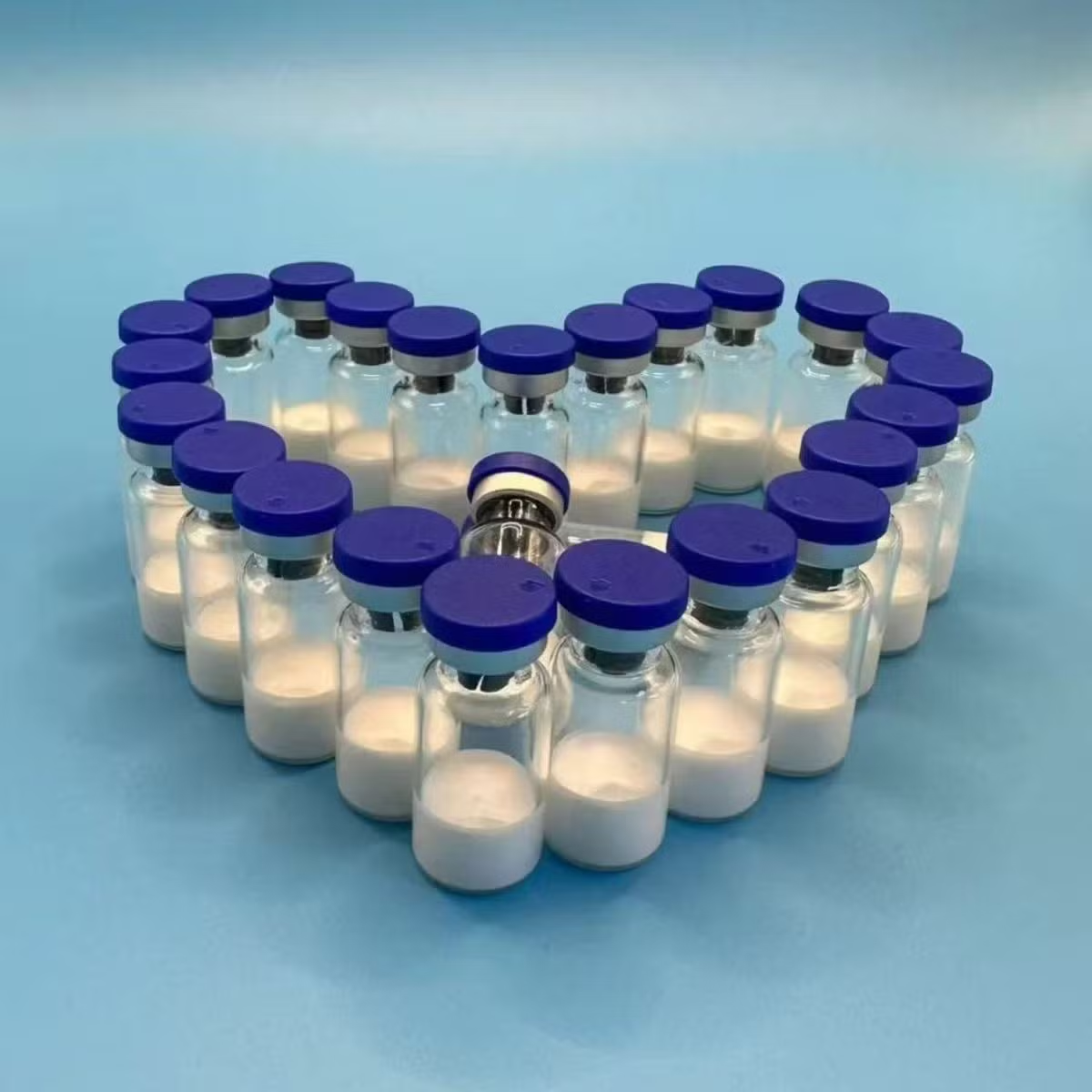
Peptides have become a fundamental tool in modern scientific research, allowing scientists to study cellular processes, protein interactions, and drug development with unprecedented precision. Among these, High-purity peptides are particularly critical, as the quality and consistency of these compounds directly affect experimental accuracy and reproducibility. Understanding why high-purity peptides matter helps researchers make informed decisions when selecting peptide sources and designing experiments.
Defining High-Purity Peptides
High-purity peptides are synthetic or naturally derived peptides that have undergone rigorous purification processes to remove contaminants, byproducts, and incomplete sequences. These peptides typically achieve purity levels above 95%, ensuring minimal interference in research applications. The consistent composition of high-purity peptides allows researchers to obtain reliable results, especially in sensitive experiments where minor impurities could compromise data integrity.
The Role of High-Purity Peptides in Experimental Accuracy
Experimental accuracy depends on the use of high-quality reagents, and high-purity peptides are no exception. Impurities in peptides can cause unintended biological effects, interfere with receptor binding, or alter cellular responses. By using high-purity peptides, laboratories can eliminate these variables, reducing experimental errors and enhancing reproducibility. This reliability is essential in drug discovery, molecular biology studies, and biochemical research.
Applications of High-Purity Peptides in Research
High-purity peptides are employed in a wide range of scientific applications. In pharmacology, they are used to identify and test new therapeutic targets. In molecular biology, high-purity peptides help elucidate protein-protein interactions, signal transduction pathways, and enzyme kinetics. Additionally, immunology studies rely on high-purity peptides to generate precise immune responses for antibody production and vaccine development. Across all applications, the integrity of high-purity peptides ensures that results reflect true biological phenomena rather than experimental artifacts.
Advantages of Using High-Purity Peptides
The use of high-purity peptides offers multiple advantages in research. First, they provide consistent and reproducible results, which are vital for validating experimental findings. Second, high-purity peptides reduce the risk of side reactions or contamination that could skew data. Third, they improve experimental efficiency by minimizing the need for repeated trials due to unreliable reagents. Collectively, these benefits make high-purity peptides indispensable in high-level scientific research.
Quality Control in High-Purity Peptides
Producing high-purity peptides involves stringent quality control measures. Techniques such as High-Performance Liquid Chromatography (HPLC) and mass spectrometry are used to verify peptide composition and purity. Certificates of Analysis (COAs) are provided to confirm that peptides meet specified purity standards. By sourcing high-purity peptides from reputable suppliers who adhere to these practices, researchers can ensure that their experiments remain precise and reproducible.
Storage and Handling of High-Purity Peptides
Proper storage and handling are essential to maintain the integrity of high-purity peptides. Most peptides require refrigeration or freezing and protection from moisture and light. Repeated freeze-thaw cycles can degrade peptides, affecting their performance in experiments. By following recommended protocols, laboratories preserve the quality of high-purity peptides, ensuring consistent results across studies.
Selecting Reliable Suppliers for High-Purity Peptides
Choosing trustworthy suppliers is crucial when procuring high-purity peptides. Reputable suppliers provide detailed product information, verified purity levels, and secure shipping options. They often offer technical support to guide researchers on peptide usage and handling. Sourcing high-purity peptides from reliable suppliers reduces the risk of receiving contaminated or substandard products, which could compromise research outcomes.
Impact of High-Purity Peptides on Drug Development
In drug development, high-purity peptides are used to screen potential therapeutic candidates, study receptor interactions, and test efficacy in preclinical models. The purity of peptides directly affects pharmacokinetics and biological activity, making high-purity peptides indispensable in early-stage drug discovery. Accurate data generated using high-purity peptides accelerates the development of safe and effective treatments.
Future Trends in High-Purity Peptides
The demand for high-purity peptides is expected to grow as research becomes more complex and precise. Advances in peptide synthesis and purification techniques are making it possible to produce even higher-quality peptides at scale. Emerging technologies such as automated peptide synthesizers and improved analytical methods will enhance the availability and consistency of high-purity peptides for laboratories worldwide.
Conclusion
High-purity peptides are essential for reliable, accurate, and reproducible scientific research. Their consistent composition, rigorous quality control, and versatility make them a cornerstone in molecular biology, pharmacology, immunology, and drug development studies. By sourcing peptides from trusted suppliers and following proper storage and handling protocols, researchers can fully leverage the benefits of high-purity peptides to advance knowledge and innovation. Prioritizing high-purity peptides ensures that experiments yield meaningful results and contribute to the advancement of science.