







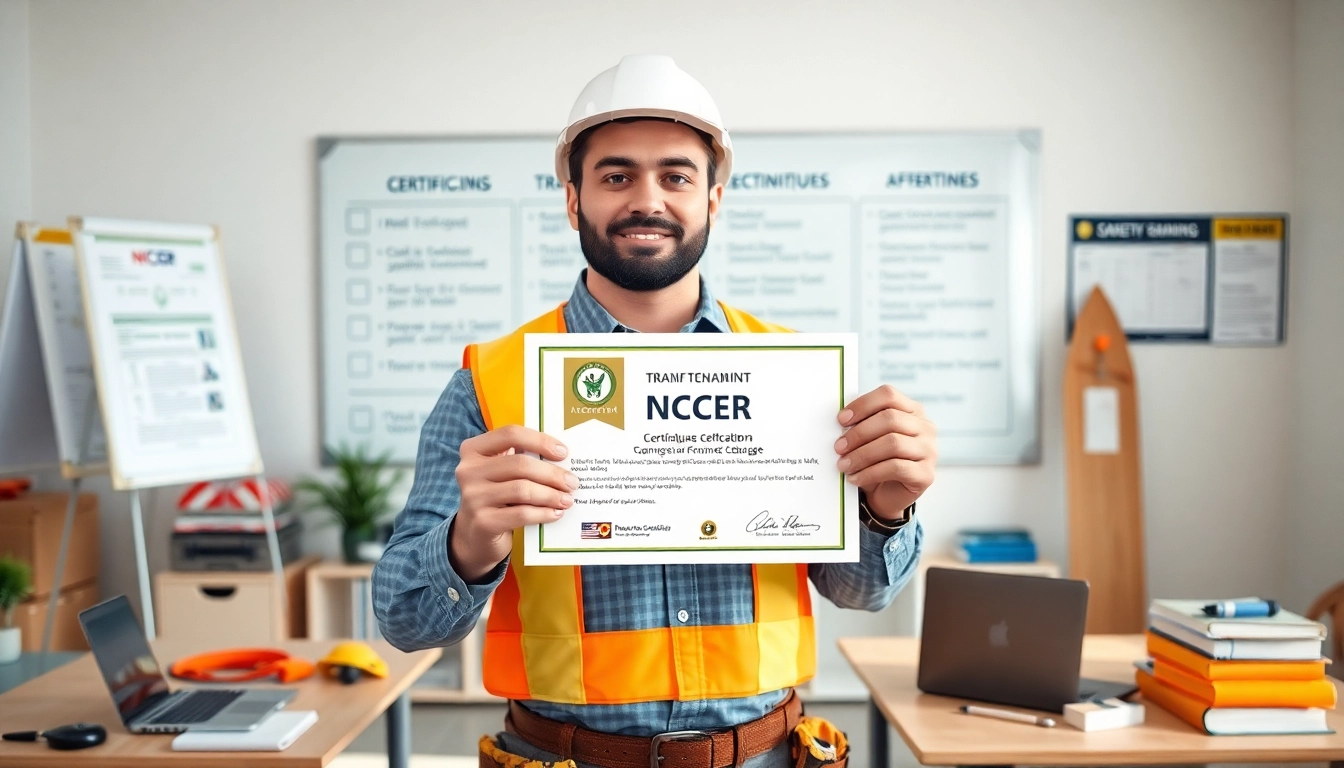
Understanding NCCER Certification
What is NCCER Certification?
NCCER stands for the National Center for Construction Education and Research, which was founded in 1996. The nccer certification is a recognized credential that showcases an individual’s skills and knowledge in the construction and maintenance industries. It serves as a standard of measurement for the competencies required for a range of skilled trades, including plumbing, electrician work, pipefitting, and welding. As an industry-driven program, NCCER certification ensures that professionals meet the evolving needs and demands of the construction sector, laying a solid foundation for their careers.
Benefits of NCCER Certification
Obtaining NCCER certification carries numerous benefits for both individuals and employers. For job seekers, it can significantly enhance employability, as many contractors and employers look favorably upon certified individuals due to their proven expertise. The certification helps in standardizing skills across the industry, which can lead to higher pay and better job security. For employers, hiring certified professionals can mean improved productivity and safety on site, as these individuals have undergone rigorous training that complies with industry standards.
Eligibility and Requirements for NCCER Certification
To be eligible for NCCER certification, candidates typically need to be at least 18 years old and have a high school diploma or equivalent. The certification process also requires candidates to complete an approved training program and pass the associated exams. Some hands-on experience in the relevant trade may be required, depending on the specific area of certification. Furthermore, it is crucial that candidates engage with recognized NCCER training providers to fulfill the necessary educational components.
How to Obtain NCCER Certification
Step-by-Step Guide to Certification
Obtaining NCCER certification involves several key steps:
- Choose Your Trade: Decide on the specific area or trade for certification, such as HVAC, electrical, or carpentry.
- Enroll in an Approved Training Program: Locate a training program accredited by NCCER that suits your chosen trade.
- Complete Required Coursework: Complete all classroom instruction and hands-on training outlined in the program.
- Pass the Certification Exam: Successfully take and pass the NCCER certification exam.
- Maintain Your Certification: Keep abreast of industry changes and renew your certification as required.
Recommended Training Programs for NCCER Certification
NCCER has developed a variety of training programs tailored to different trades and career paths. These programs often include an extensive curriculum that covers theory, practical skills, and safety practices. A few recommended programs include:
- Basic Safety: Focusing on essential safety protocols in various construction environments.
- Electrical: Covering residential, commercial, and industrial electrical systems.
- Heavy Equipment Operations: Teaching skills required for operating and maintaining heavy machinery safely.
- Plumbing: Offering in-depth knowledge about plumbing codes, practices, and installation techniques.
Preparing for the NCCER Certification Exam
Effective preparation is crucial to passing the NCCER certification exam. Here are some tips:
- Study the NCCER Curriculum: Use the study materials provided during your training to refresh your understanding of key concepts.
- Practice Exams: Take practice tests to familiarize yourself with the exam format and types of questions.
- Join Study Groups: Collaborating with peers can enhance your learning experience and provide different perspectives.
- Consult Instructors: Don’t hesitate to ask for clarification on topics you find challenging.
Real-World Applications of NCCER Certification
Career Paths Available with NCCER Certification
NCCER certification opens doors to a myriad of career opportunities within the skilled trades. Some of the most sought-after career paths include:
- Electrician: Working on the installation and maintenance of electrical systems in homes and businesses.
- HVAC Technician: Specializing in heating, ventilation, and air conditioning systems.
- Pipefitter: Focusing on the installation and repair of piping systems.
- Carpenter: Engaged in building frameworks, structures, and furniture from wood and other materials.
Impact on Job Opportunities and Salaries
The need for skilled workers in the construction industry is growing, and obtaining an NCCER certification can significantly impact job opportunities and salaries. Studies show that certified professionals can command higher wages and have access to better job security. Employers are often willing to pay a premium for certified tradespeople because they bring proven technical skills, reliability, and a commitment to safety.
Success Stories from Certified Professionals
Many NCCER certified professionals have reported significant career advancements following their certification. Case studies reveal that individuals have transitioned from entry-level positions to supervisory roles, increased their earning potential substantially, and expanded their skill sets through ongoing education and training. Networking within the NCCER community and leveraging certification can lead to mentorship opportunities, further fostering professional growth.
Common Challenges and Solutions
Overcoming Exam Anxiety for NCCER Certification
Exam anxiety is a common experience among candidates preparing for NCCER certification. To mitigate stress, potential test-takers can:
- Prepare Thoroughly: Confidence comes from preparation. The more you study, the less anxious you will feel.
- Practice Relaxation Techniques: Engage in deep breathing exercises or meditation to calm nerves before the test.
- Set a Study Schedule: Consistency in study habits can alleviate anxiety by transforming last-minute cramming into a manageable learning process.
Addressing Training Gaps and Resources
Some individuals may encounter gaps in training when pursuing NCCER certification. Here are some solutions:
- Seek Additional Learning Resources: Utilize textbooks, online courses, and video tutorials to bridge knowledge gaps.
- Attend Workshops or Seminars: Participate in relevant industry workshops to enhance skills and insights.
- Utilize Mentorship Programs: Connecting with industry veterans can provide invaluable knowledge and practical insights.
Networking Within the NCCER Community
Networking is key to professional growth in the construction industry. Engaging with the NCCER community allows individuals to:
- Connect with Peers: Building relationships with fellow professionals can lead to job opportunities and resource sharing.
- Participate in Events: Attend industry events and conferences to stay informed and engaged.
- Join Online Forums: Online platforms provide spaces for discussion, question-answering, and sharing best practices.
FAQs about NCCER Certification
What does NCCER certification involve?
NCCER certification involves completing a training program, passing exams, and demonstrating competency in specific trades.
How long does it take to earn NCCER certification?
The duration varies, but training programs typically range from several weeks to a few months, depending on the trade.
Is NCCER certification recognized nationally?
Yes, NCCER certification is widely recognized across the United States and by various industries.
Can I take the NCCER certification exam online?
Some programs may offer online assessments; however, most certification exams require in-person proctoring.
What are the costs associated with NCCER certification?
Costs can vary based on the training provider, materials, and exam fees, typically ranging from a few hundred to over a thousand dollars.