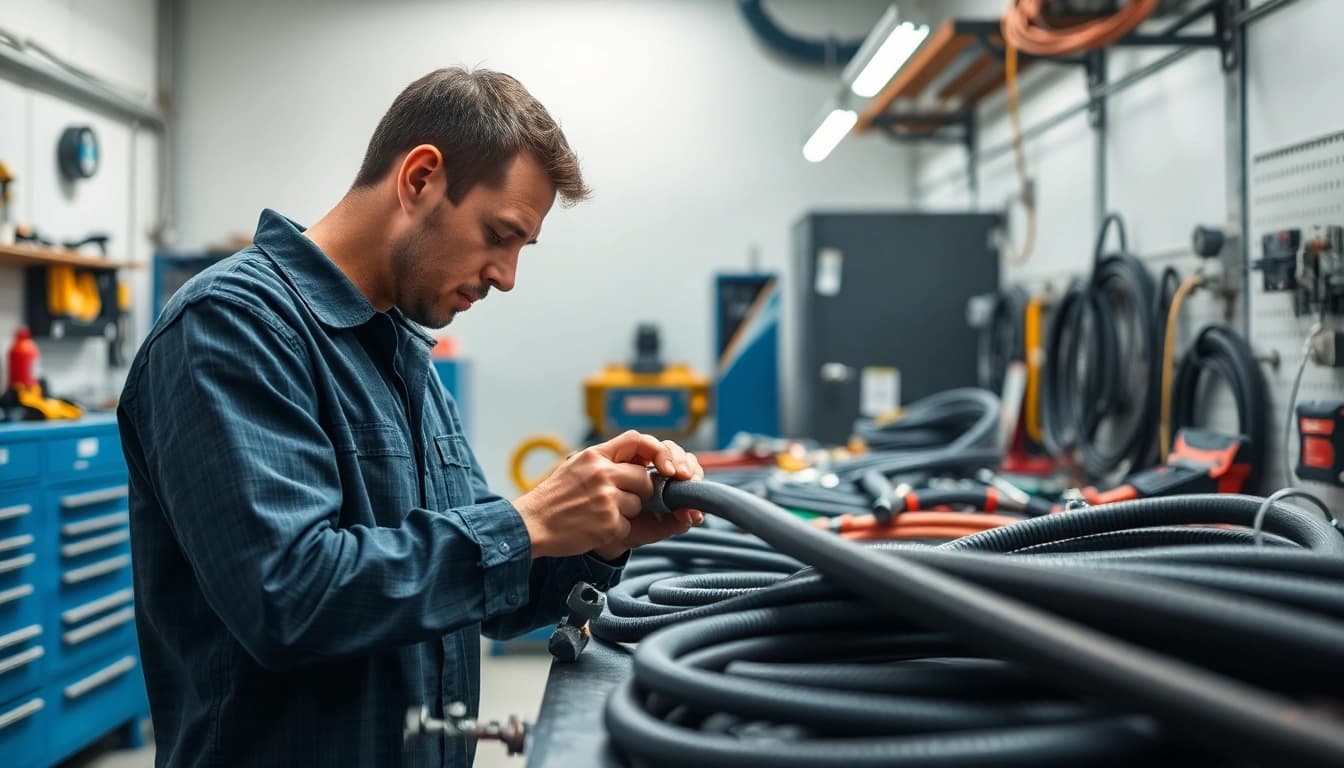
Understanding Hydraulic Hose Repair
What is Hydraulic Hose Repair?
Hydraulic hose repair refers to the process of restoring functionality to hydraulic hoses that have suffered damage or wear. These hoses are critical components of hydraulic systems, responsible for transporting fluid under high pressure to various machinery and equipment. When a hydraulic hose fails, it can lead to system malfunctions, inefficiencies, and even safety hazards. Therefore, timely and effective repairs are essential to maintain operational integrity and safety.
Common Types of Hydraulic Hoses
Hydraulic hoses come in various types, each suited for specific applications and pressure ratings. Some of the most common types include:
- Wire-Braided Hoses: These hoses feature a reinforcement layer made of intertwined steel wires, providing high-pressure resistance and flexibility.
- Spiral Hoses: Suitable for extreme pressures, spiral hoses have multiple layers of spiraled steel wires, making them ideal for heavy-duty applications.
- Thermoplastic Hoses: These hoses are lightweight and resistant to chemicals, making them popular in a variety of industries.
- Rubber Hoses: Versatile and used in many applications, rubber hoses can handle different temperature ranges and have good abrasion resistance.
Signs You Need Hydraulic Hose Repair
Recognizing signs of potential hose failure is crucial for preventing accidents and maintaining productivity. Here are some indicators that you might need hydraulic hose repair:
- Visible leaks or wet spots around the hose.
- Cracks, bulges, or blisters on the hose surface.
- Strange noises or vibrations in the system during operation.
- Reduced performance or loss of hydraulic power.
- Excessive heat generation around the hose area.
Tools and Equipment for Hydraulic Hose Repair
Essential Tools for the Job
Having the right tools is vital for anyone undertaking hydraulic hose repairs. Essential tools include:
- Cutting Tools: Hose cutters or saws are necessary for cutting hoses accurately.
- Crimping Machines: These machines are used to install fittings securely onto the ends of hoses.
- Hose Inspection Gauges: These devices help diagnose hose integrity and pressure ratings.
- Wrenches and Sockets: Necessary for loosening and tightening fittings.
- Replacement Fittings and Adaptors: Ensure you have the right sizes compatible with the hoses you're working on.
Understanding Hose Specifications
Before performing any repairs, it's essential to understand the specifications of the hose being worked on. This includes:
- Pressure Rating: Verify the maximum pressure the hose can handle without failure.
- Temperature Range: Ensure the hose can maintain performance within required temperature limits.
- Fluid Compatibility: Confirm that the hose material is suitable for the hydraulic fluid being used.
- Diameter and Length: Accurate measurements are necessary for a proper fit and optimal flow.
Safety Equipment Considerations
Safety should always be a priority when engaging in hydraulic hose repair. Recommended safety equipment includes:
- Safety Goggles: Prevent eye injuries from flying debris or pressurized fluid.
- Gloves: Protect hands from sharp edges and potential chemical exposure.
- Steel-Toed Boots: Guard against heavy falling objects.
- Protective Clothing: Wear long sleeves and trousers to shield skin from injuries.
- Respirators: In areas with poor ventilation or exposure to harmful fumes.
Step-by-Step Hydraulic Hose Repair Guide
Preparing the Workspace
Before starting any repair work, it's crucial to prepare your workspace. Here are the steps for effective preparation:
- Ensure the area is clean and organized to minimize hazards.
- Gather all necessary tools and materials to avoid interruptions during the repair.
- Set up adequate lighting to improve visibility and reduce the risk of accidents.
- Clearly mark hazardous zones or areas where you will be working.
- Ensure all machinery is powered down and released of pressure before beginning.
Removing and Inspecting the Hose
Carefully removing the defective hose is an important step in the repair process:
- Disconnect the hose from the hydraulic system and fittings using the appropriate tools.
- Inspect the entire hose for signs of wear, leaks, or structural damage.
- Measure the length and diameter for the replacement hose to ensure a proper fit.
- If the hose is reusable and requires minor repairs, check for compatibility with repair kits.
Reconnecting and Testing the Hose
Once you have repaired or replaced the hose, it’s time to reconnect and test:
- Attach the new or repaired hose firmly to the hydraulic fittings.
- Ensure all connections are tight and leak-proof, following the manufacturer’s guidelines.
- Gradually introduce hydraulic fluid back into the system, monitoring for leaks during the process.
- Conduct a thorough system test to confirm proper functionality and that there are no remaining issues.
Preventive Maintenance for Hydraulic Hoses
Regular Inspections and Maintenance
Preventive maintenance is essential for extending the lifespan of hydraulic hoses. It includes:
- Performing regular visual inspections for any signs of wear.
- Checking fittings and connections for leaks or damage.
- Keeping the surrounding area clean and free of debris that might cause abrasions.
- Documenting maintenance activities for future reference and accountability.
Maintaining Proper Fluid Levels
Hydraulic fluids play a critical role in system performance. To maintain proper fluid levels:
- Regularly check fluid levels against manufacturer specifications.
- Top off fluids as necessary with the correct type to prevent overheating or system failure.
- Monitor fluid quality, replacing it if it becomes contaminated or degraded.
Best Practices for Hose Storage
Proper hose storage can prevent premature wear and damage:
- Coil hoses properly to avoid kinks or bends that can weaken them over time.
- Store them in a cool, dry place away from direct sunlight and extreme temperatures.
- Keep hoses away from chemicals and hazards that could lead to degradation.
FAQs About Hydraulic Hose Repair
How do I know when a hydraulic hose needs repair?
Look for leaks, bulges, cracks, or significant wear on the hose. Regular inspections can help identify these issues early.
Can I repair a hydraulic hose myself?
If you have knowledge and the right tools, it's possible. However, seeking professional assistance for safety and compliance is highly recommended.
What materials are used in hydraulic hoses?
Hydraulic hoses are typically made from rubber, thermoplastic, or metal materials, depending on the application and environment.
How often should hydraulic hoses be inspected?
Inspect hoses regularly, ideally every three to six months, or as specified by the machinery guidelines to ensure operational safety.
What causes hydraulic hose failure?
Common causes of hydraulic hose failure include wear and tear, exposure to heat, and contamination of hydraulic fluids, among others.