
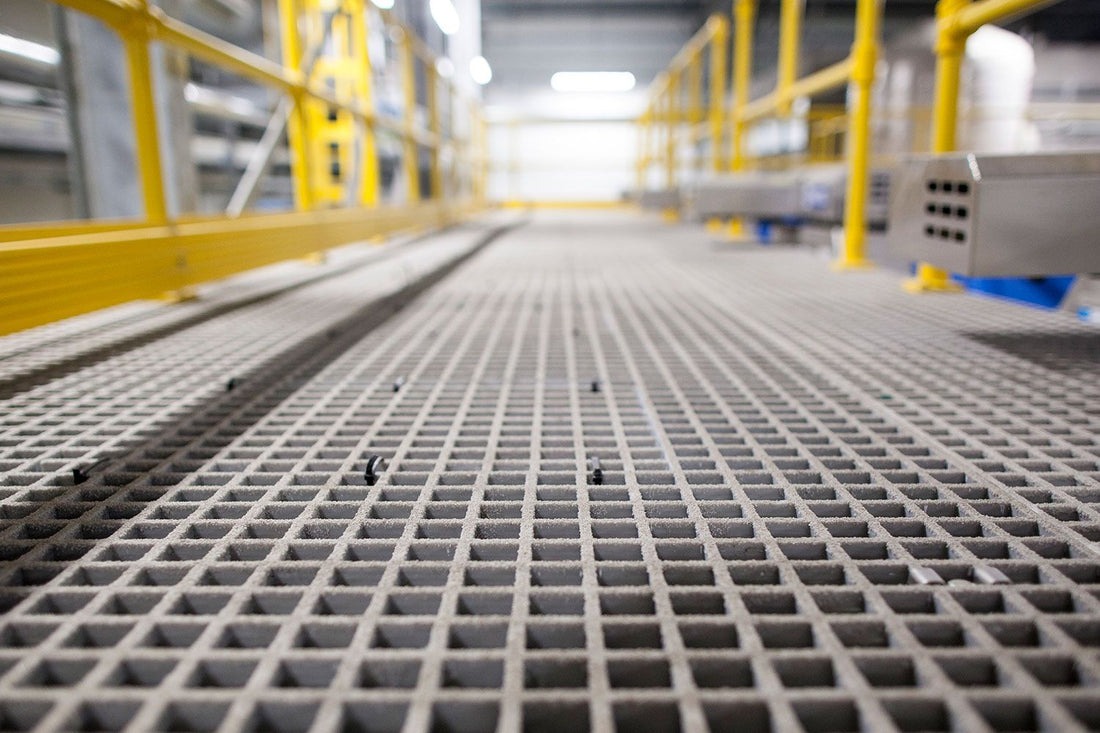
Introduction
In demanding industrial environments, material selection plays a critical role in ensuring long-term safety, efficiency, and cost-effectiveness. GRP Grating—also known as Glass Reinforced Plastic grating—has become one of the most versatile and high-performance solutions for heavy-duty applications across industries such as marine, oil and gas, construction, utilities, chemical processing, and transportation. Its durability, corrosion resistance, and design flexibility make it a superior alternative to traditional steel or aluminum grating.
This article explores custom GRP Grating options designed specifically for heavy-duty applications. You will learn about material properties, design types, customization choices, load-bearing capabilities, installation considerations, and advantages that make GRP Grating a preferred solution for engineers and project managers.
What Makes GRP Grating a Heavy-Duty Material?
GRP Grating is engineered from a combination of glass fibers and a thermosetting resin matrix. The result is a lightweight yet incredibly tough composite that can withstand harsh conditions without degradation.
Key Material Properties
- High Strength-to-Weight Ratio Despite being significantly lighter than metal, GRP Grating offers exceptional structural strength suitable for heavy traffic and industrial loads.
- Corrosion and Chemical Resistance GRP composites do not rust or corrode, making GRP Grating an ideal solution for chemical plants, offshore platforms, coastal facilities, and wastewater treatment plants.
- Fire Retardant Options Many custom GRP Grating products can be manufactured with enhanced fire safety ratings to meet industry regulations.
- Low Thermal and Electrical Conductivity These characteristics improve safety in high-voltage environments, refineries, and power stations.
- Anti-Slip Capabilities Textured surfaces or grit-top finishes enhance worker safety in wet or oily conditions.
Types of Custom GRP Grating for Heavy-Duty Environments
Molded GRP Grating
Molded GRP Grating features a one-piece construction created by interlocking resin-saturated glass fibers in a mold. Best for:
- Chemical processing plants
- Marine walkways
- Slippery or corrosive environments
Pultruded GRP Grating
Pultruded GRP Grating is produced by pulling glass fiber rovings and mats through a resin bath and shaping them through a heated die. This results in extremely rigid bars capable of very high load capacities. Best for:
- Heavy machinery platforms
- Bridge flooring
- Conveyor walkways
Solid-Top GRP Panels
For applications requiring containment or complete surface coverage, solid-top GRP Grating provides structural integrity without open mesh. Best for:
- Food production
- Public access areas
- Drainage covers
Phenolic GRP Grating
Phenolic resin-based GRP Grating delivers enhanced fire and smoke performance. Best for:
- Offshore oil and gas rigs
- Rail and subway stations
- High-risk fire zones
Custom Design Options for GRP Grating
Custom Panel Sizes and Thickness
Heavy-duty operations often require grating panels tailored to specific dimensions. Custom GRP Grating can be manufactured in a wide range of thicknesses—typically 20mm, 25mm, 38mm, and 50mm—to meet load-bearing needs.
Load-Bearing Requirements
Engineers can specify deflection limits, load ratings, and impact resistance. Custom heavy-duty GRP Grating is designed to withstand:
- Forklift operations
- Heavy pedestrian traffic
- Industrial machine vibration
Surface Finishes
Surface customization improves safety and performance:
- Grit-top anti-slip surface
- Smooth top
- Concave finish
- Embedded quartz aggregate
Custom Colors
Color-coded GRP Grating supports safety standards and visual zoning:
- Yellow for edges and hazard zones
- Green for chemical plants
- Grey or black for industrial flooring
Resin System Options
Choice of resin affects resistance levels:
- Orthophthalic Resin GRP Grating – general purpose
- Isophthalic Resin GRP Grating – enhanced chemical resistance
- Vinyl Ester Resin GRP Grating – maximum corrosion resistance
GRP Grating in Heavy-Duty Industrial Applications
Oil & Gas Industry
Offshore platforms require materials that resist saltwater corrosion, heavy loads, and fire risks. GRP Grating excels in:
- Drilling platforms
- Access walkways
- Pipe racks
Marine & Coastal Infrastructure
Saltwater and constant moisture degrade metal structures. GRP Grating provides long-lasting durability for:
- Jetties
- Dock walkways
- Ship decks
Power Generation Plants
Electrical insulation and corrosion resistance make GRP Grating the preferred choice for:
- Cooling tower platforms
- Transformer areas
- Cable management structures
Manufacturing & Processing Facilities
Factories benefit from custom GRP Grating for:
- Assembly line platforms
- Maintenance walkways
- Equipment access
Wastewater Treatment Plants
Constant exposure to chemicals and moisture demands heavy-duty GRP Grating designed for:
- Aeration tank covers
- Filtration tanks
- Service platforms
Advantages of Using Custom GRP Grating for Heavy-Duty Needs
Long Service Life
Custom GRP Grating resists degradation for decades, reducing expensive maintenance cycles.
Cost-Effective Over Time
While the upfront cost may be higher than steel, savings come from:
- No painting or galvanizing
- Minimal maintenance
- No replacement due to corrosion
Superior Safety Performance
Non-conductive properties and slip-resistant surfaces make GRP Grating one of the safest options for industrial operations.
Lightweight Yet Strong
Its lightweight nature reduces labor costs, simplifies installation, and improves efficiency without compromising strength.
Installation Considerations for Custom GRP Grating
Support Structure Requirements
Even for heavy-duty loads, GRP Grating requires proper support beams. Engineers must:
- Ensure correct spans
- Specify deflection limits
- Follow manufacturer guidelines
Fastening Systems
Secure installation is key to long-term performance. Options for GRP Grating fastening include:
- Stainless steel clips
- M-clips for pultruded grating
- C-clips for molded grating
Cutting and Fabrication
One major advantage is that GRP Grating can be easily cut on-site using basic tools without overheating, sparking, or corrosion concerns.
Compliance and Standards
Most custom GRP Grating products comply with:
- ISO standards
- OSHA safety guidelines
- International fire-rating certifications
How to Choose the Right GRP Grating for Heavy-Duty Applications
Evaluate Load Requirements
Determine whether you need molded, pultruded, or solid panels based on expected loads.
Consider Environmental Factors
Corrosive chemicals, saltwater, high temperatures, or heavy moisture will determine the appropriate resin type and design.
Identify Safety Needs
If slip hazards, fire risk, or electrical work are factors, select a corresponding GRP Grating surface or resin system.
Custom Design Specifications
Specify color, thickness, mesh size, and panel dimensions based on operational requirements.
Consult with Experienced GRP Manufacturers
Professional guidance ensures your custom GRP Grating meets industry standards and performs reliably over time.
Why Customization Matters for Heavy-Duty Projects
Standard materials often cannot meet the extreme conditions found in heavy industry. Custom GRP Grating ensures:
- Optimal load performance
- Enhanced safety features
- Better compatibility with existing structures
- Longer lifespan
- Reduced downtime
Customization also supports branding and safety color requirements, helping industrial facilities maintain clear visual organization.
Conclusion
Custom GRP Grating solutions offer unmatched versatility, strength, and durability for heavy-duty industrial applications. Whether you operate in offshore energy, marine environments, power generation, wastewater management, or large-scale manufacturing, GRP Grating delivers the performance needed to resist harsh conditions, heavy loads, and long-term wear. With a wide range of customizable options—from resin types and panel thicknesses to surface finishes and color-coding—GRP Grating is engineered to meet the exact needs of your project.